

Making Working and Learning Spaces Safe
We support institutions to build safe, diverse, inclusive, and equitable working and learning spaces.
We support institutions to build safe, diverse, inclusive, and equitable working and learning spaces.
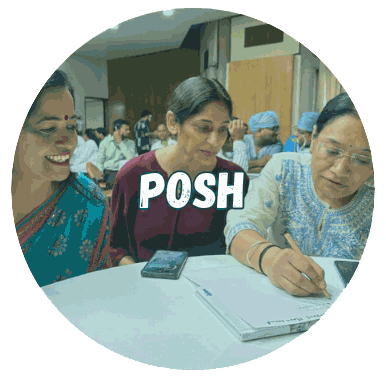
The Martha Farrell Foundation supports institutions in building safe, diverse, inclusive, and equitable working and learning environments. This includes providing the capacity and tools to mainstream gender and ensure sensitivity in compliance with laws such as the Sexual Harassment of Women at Workplace (Prevention, Prohibition and Redressal) Act, 2013 and the UGC guidelines (2015) for the Prevention of Sexual Harassement in Higher Education Institutions for all campuses.
We work with civil society organisations, corporations, private sector organisations, governments, and higher education institutes to enable safe and just working and learning environments. MFF has also supported district governments in Delhi and Haryana by forming Local Committees and building their capacity to resolve cases.
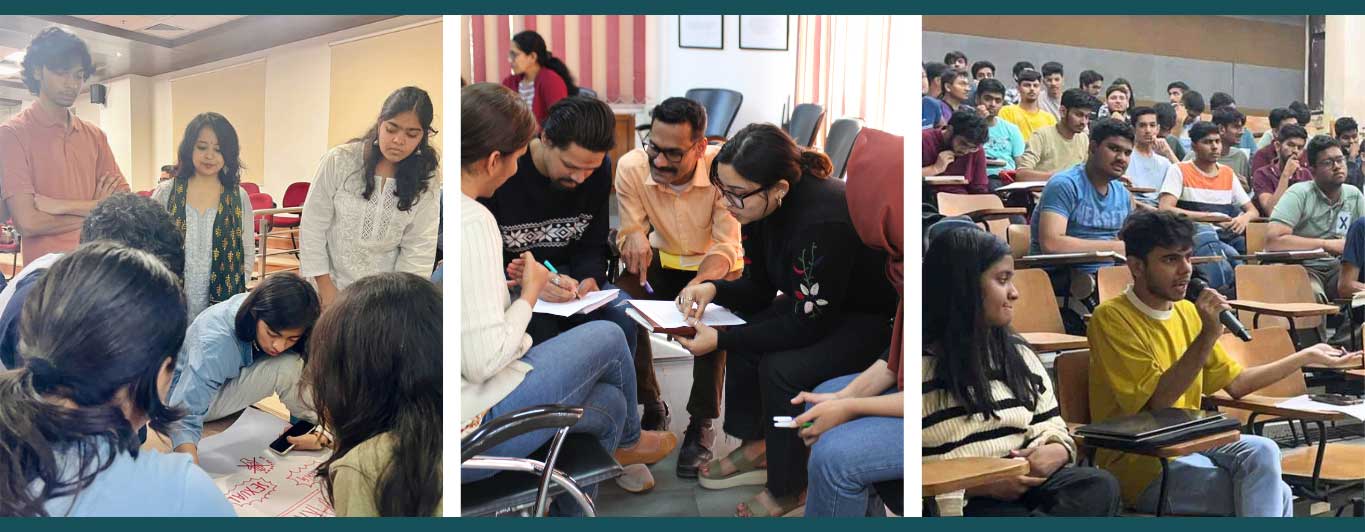
MFF’s participatory approaches support staff to understand the complex and deep-rooted gender biases impacting their environments. The sessions with employees, senior management, and Internal Committee (IC) members support workplaces and educational institutions in creating a culture of gender equality and justice.
employees trained
institutional partners
Internal Committees formed and capacitated
students trained
trainers trained on gender and the 2013 Act
According to official reports, as of 2023, India has 1,113 universities and 43,796 colleges. Yet, between 2022-23, the University Grants Commission (UGC) received annual reports from only 238 universities and 372 colleges. These reports revealed that over 1,599 awareness workshops were held during this period, underscoring a growing emphasis on fostering safer campuses.
Furthermore, the reports highlighted 425 complaints of sexual harassment received across these institutions, with 424 cases resolved. While this number indicates that reporting mechanisms are in place, it likely represents only a fraction of the actual problem. Many incidents of sexual harassment remain unreported due to stigma, fear, or lack of awareness about redressal systems.
In response to this, the Martha Farrell Foundation, in partnership with the Association of Indian Universities, launched the Safe Campus Programme in 2020. It has since trained nearly 600 faculty across 130+ institutions and reached over 10,000 students on UGC guidelines and the PoSH Act.
The programme goes beyond compliance, focusing on awareness, capacity building, and cultural change: equipping students, faculty, and staff to understand consent, uphold responsibilities, and respond effectively to harassment, fostering safer campus environments. At its heart, the programme reflects MFF's mission to challenge systemic inequalities and build a more just, respectful, and safe world for all.
Write to us to find out more

Instituting an anti sexual harassment policy and Guideline for Prevention of Sexual and Gender-Based Violence at CTA and the Tibetan community [with Martha Farrell Foundation] was quite powerful experience. It helped me understand the importance of working with different stakeholders in the community to bring change. Tsering Kyi, Women’s Empowerment Desk (WED), Department of Finance, Central Tibetan Administration

“We need more conversation, more awareness and more discussion on the issue [of sexual harassment at workplace] in every corner of the country. And to do it repeatedly, until its existance and importance isn'ta question or debate. My association with MFF helped me translate some of that for Jind (district in Haryana).” Suhita Dugar, Former Chief Minister's Good Governance Associate - Jind

“Since 2018 there has been a major shift of how we look at the power hierarchies in the art world, and a wide range of art workers have spoken up against abuse and exploitation in the field. Still we are only beginning to reform existing structures and the Martha Farrell Foundation has helped set up an internal committee that is deeply invested in creating a safer work environment for everybody who works with the museum, and is also available for anybody who engages with us.” Arnika Ahaldag

“The workshop helped in creating awareness and sensitising employees who are in supervisory roles, so that they can understand unacceptable and inappropriate behaviors leads to sexual harassment of women at the workplace. The session was very participatory and examples as well as case studies/group exercises enabled employees to think about their rights and obligations under this Act.” Neelam Toppo, Program Officer, SHRC State Health Resource Centre, Raipur

“Everything about the session was good. It was well communicated and cleared up the misconceptions we had about how we looked at the intentions of the respondent before looking at the impact it had on the aggrieved. But we now know that it is the impact that matters in the end and not the intent.” Ravinder Kumar, Law Officer, North Delhi Municipal Corporation